Sweet Rosie: A Whimsical Script Font for Makers
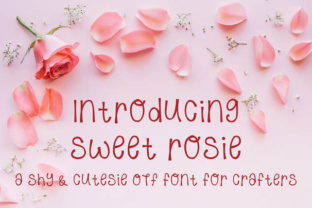
There is a specific kind of quiet magic that happens when you finally find the right typeface for a handmade product. I remember sitting at my desk last Tuesday, surrounded by rolls of kraft paper, spools of twine, and half-finished candle labels that just weren’t clicking. The design was clean, but it lacked soul. It needed warmth. It needed personality. That is when I opened Sweet Rosie, a swirly and girly hand written font for crafters, with an ease of style and character., and suddenly, the entire project came to life. As someone who spends hours tweaking kerning and testing print proofs, finding Script Handwritten Fonts that balance legibility with artistic flair is rare. Sweet Rosie does not just sit on the page; it dances across it, offering a visual rhythm that feels both personal and professional.
Transforming Candle Labels with Swirly Handwritten Charm
When working with small surface areas like candle jars or boutique soap bars, every millimeter counts. Sweet Rosie shines in these constrained spaces because its loops and swashes are designed to be decorative without becoming cluttered. I recently used it for a line of lavender and vanilla soy candles. The goal was to evoke a sense of calm and nostalgia. By placing the scent name in Sweet Rosie and pairing it with a minimal, all-caps sans serif for the weight and ingredients, the label achieved a perfect hierarchy. The script draws the eye first, creating an emotional connection, while the secondary text provides necessary information cleanly. This combination of Script Handwritten elegance and modern simplicity is a staple in successful Fonts usage for product packaging. The font’s natural variation means that no two labels look exactly robotic, adding to the handmade appeal that customers crave.
Elevating Wedding Invitations and Stationery Design
Wedding stationery is perhaps the most demanding arena for typography. Couples want their invitations to feel unique, romantic, and timeless. Sweet Rosie fits this niche beautifully, particularly for the couple’s names or the main header. Its girly yet sophisticated curves mimic the flow of traditional calligraphy but with a more approachable, modern handwritten feel. When designing a sample suite, I used Sweet Rosie for the bride and groom’s names on the main invitation card. The result was airy and light, preventing the heavy cardstock from feeling too formal or stiff. For Script Handwritten enthusiasts, the key is knowing when to let the font breathe. Sweet Rosie works best when given ample white space, allowing its tails and connectors to extend naturally. This makes it ideal for welcome boards, place cards, and menu headers where the text is short but impactful. It transforms standard digital templates into bespoke Fonts experiences that feel curated by hand.
Creating Eye-Catching Social Media Graphics and Branding
In the digital storefront, your brand identity is communicated through images and text overlays. Whether you are creating Instagram stories, Pinterest pins, or Facebook ads, consistency is key. Sweet Rosie serves as an excellent anchor for brand recognition. I use it consistently for quote graphics and seasonal announcements in my shop. Because it is a Script Handwritten style, it adds a human touch to digital content, which can often feel cold or corporate. When paired with neutral backgrounds and soft pastel colors, the font enhances the aesthetic without overpowering the message. It is particularly effective for highlighting key phrases like "New Arrival," "Handmade with Love," or "Limited Edition." Using consistent Fonts across your social media channels helps followers instantly recognize your content in their feed, building trust and familiarity over time. Sweet Rosie’s versatility allows it to adapt from playful spring promotions to elegant holiday campaigns simply by adjusting the color palette and accompanying graphics.
Designing Readable Stickers and Planner Pages
Sticker sheets and printable planner pages are huge sellers in the crafting community, but they present a unique challenge: readability at small sizes. Sweet Rosie is surprisingly robust in this regard. While it is undeniably decorative, its letterforms are distinct enough to remain legible even when scaled down for sticker headers or weekly planner titles. I tested it on a sheet of functional stickers for a daily organizer, using it for days of the week and motivational quotes. The swashes add a delightful embellishment that makes the planner feel special, encouraging users to engage with their planning routine. However, it is crucial to avoid using it for long paragraphs or tiny instructional text. Sweet Rosie is a display font at heart, meant for titles, labels, and short bursts of text. For body copy in planners, always pair it with a clean, simple sans serif to ensure ease of reading. This strategic use of Script Handwritten Fonts ensures that your designs are not only beautiful but also functional for the end user.
Pairing Sweet Rosie with Complementary Typefaces
The true power of any font lies in its ability to play well with others. Sweet Rosie is a standout performer when paired with contrasting typefaces. To maintain balance, I recommend combining it with a geometric sans serif or a classic serif font. The contrast between the organic, flowing lines of Sweet Rosie and the structured, rigid lines of a sans serif creates visual interest and clarity. For example, on a tote bag design, I paired Sweet Rosie with a bold, uppercase sans serif for the main slogan, while using the script for a subtle signature element. This layering technique adds depth to the design. When selecting companion Fonts, look for x-heights that complement the script’s proportions. Avoid pairing it with other overly decorative scripts, as this can lead to visual clutter and reduce readability. The goal is to let Sweet Rosie be the star while supporting it with understated, reliable typography.
Technical Considerations for Crafters and Sellers
Before integrating Sweet Rosie into your commercial products, it is essential to understand its technical capabilities. As a Script Handwritten font, it likely includes alternates, ligatures, and swashes that can enhance your designs. Take time to explore these features in your design software. Using alternates can prevent repetitive letter shapes in longer words, making the text look more natural and hand-lettered. Additionally, ensure you have the correct file formats for your workflow. SVG files are ideal for cutting machines like Cricut or Silhouette, while OTF or TTF files work best for printing and digital design. Always review the licensing agreement to confirm commercial use rights for physical products, digital downloads, and print-on-demand items. Understanding these details ensures that your creative process is smooth and that your final products meet professional standards. Sweet Rosie is not just a set of characters; it is a tool that, when used correctly, can elevate your entire brand presence.